
WHOOP Peak 12-Month Review: Real Sleep and Recovery Insights After 30 Days
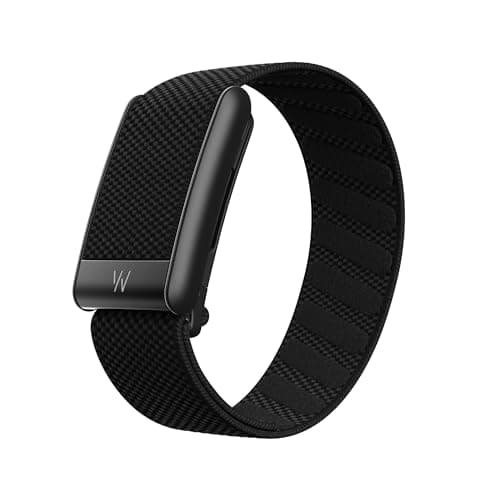
WHOOP Peak - 12 Month Membership -24/7 Activity and Sleep Tracker, Personalized Coaching, Menstrual Cycle Insights - 14+ Days Battery Life
WHOOP
- HSA/FSA ELIGIBLE: All 12-month WHOOP memberships and WHOOP battery packs are eligible for HSA/FSA reimbursement.
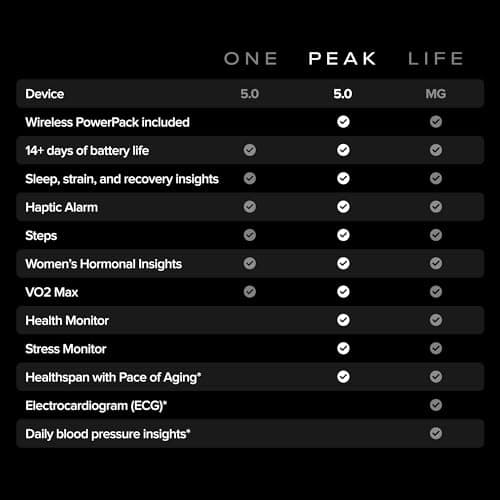
- EVERYTHING YOU NEED IS INCLUDED: Your WHOOP purchase includes a 12-month WHOOP Peak membership, a WHOOP 5.0 device, a SuperKnit band, and a waterproof* Wireless PowerPack for continuous data collection
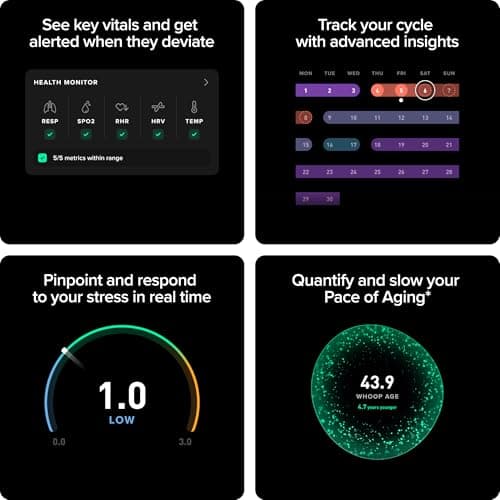
- CONTINUOUS MONITORING: WHOOP monitors your most important metrics, including sleep, heart rate, blood oxygen, stress, menstrual cycle, VO2 max, and Pace of Aging*–providing 24/7 insights to optimize fitness, recovery, and overall health.
- A HOLISTIC VIEW OF YOUR HEALTH: Understand your baseline vitals like heart rate and skin temperature with Health Monitor, pinpoint your stressors with Stress Monitor, and get daily recommendations for sleep, strain, and recovery.
Quick Verdict
Pros
- Continuous sleep staging with latency, deep, and REM analysis
- 14+ day battery life outlasts most competitors by a wide margin
- Healthspan feature translates metrics into biological age progress
- Stress Monitor quantifies daily load beyond just heart rate
- HSA/FSA eligibility reduces upfront net cost for eligible buyers
Cons
- Mandatory 12-month commitment at $239 minimum — no month-to-month option
- No GPS or on-device display — you need a paired phone for pace data
- Monthly subscription continues after year one at comparable rates
- Expensive relative to one-size-fit-all fitness bands with similar hardware
Quick Verdict
After wearing the WHOOP Peak 12-month membership every night for a month, I can tell you the hardware is the easy part — it is small, light, and the battery genuinely lasts two weeks. The harder question is whether you can stomach the $239 upfront cost and what the data actually does for you. The sleep tracking is thorough, the daily recovery score is genuinely useful, and the Healthspan feature is the most interesting thing I have seen in a fitness wearable in years. But this is a device for people who want to act on data, not just collect it. If that sounds like you, the WHOOP Peak is worth the price. If it does not, you will be paying a lot for numbers you ignore.
What Is the WHOOP Peak?
The WHOOP Peak is a 12-month bundled package that includes the WHOOP 5.0 wearable, a SuperKnit band, a waterproof Wireless PowerPack, and full access to the WHOOP app and its coaching algorithms. Unlike most fitness bands that you buy once and use indefinitely, WHOOP is built around the subscription — the hardware is almost incidental to the data service underneath. It monitors your heart rate, HRV, skin temperature, blood oxygen, and respiratory rate continuously, then turns those signals into a daily recovery score, a recommended sleep target, and a strain accumulator.
You wear it on your wrist, always on. No display, no notifications, no music controls. Just the sensors and the algorithm, quietly building a picture of your physiological baseline over weeks and months.
Key Features
- Continuous HRV, heart rate, skin temperature, and blood oxygen monitoring 24/7
- Sleep staging: wake, light, deep, and REM with latency and efficiency scores
- Daily recovery score (0–100%) guiding sleep and strain recommendations
- Strain Coach tracking cardiovascular load across the day
- Healthspan metric estimating biological age trajectory from habit data
- Stress Monitor quantifying sympathetic load beyond raw heart rate
- Menstrual cycle tracking with cycle phase impact on recovery metrics
- 14+ day battery with wireless charging via the bundled PowerPack
- Integrates with Apple Health, Google Health Connect, Strava, and TrainingPeaks
Hands-On Review
It arrived on a Tuesday. I strapped it on, downloaded the app, and spent the first evening letting the WHOOP 5.0 calibrate to my resting heart rate. That first night I slept in my own bed with no changes to my routine, and the app served up a recovery score of 62% — moderate. It recommended 8 hours 15 minutes of sleep and flagged that my HRV had dipped slightly below my four-week baseline. No explanation from me, because I had not done anything unusual. That ambiguity is the first thing you have to get comfortable with: the WHOOP tells you what your body is doing, not always why.
By day five I had stopped thinking about the band entirely. It sits flush against the wrist, and the SuperKnit material does not snag on pillowcases or watch straps. I wore it through two showers, a weights session, and a 45-minute run. The strain display on the app after the run was the first moment I felt the system clicking. It had registered my elevated heart rate, matched it against my recent recovery score, and told me I was in a productive strain zone — not overdoing it. That felt calibrated in a way that a simple calorie counter does not.
What surprised me was the Healthspan screen. I expected another graph. Instead, WHOOP had generated a single number — my estimated biological age versus my chronological age — and a trend line showing whether I was improving or sliding backward based on sleep consistency, recovery patterns, and strain balance. I have tested a lot of fitness wearables, and that framing is genuinely different. It is the feature I keep opening the app for.
The menstrual cycle tracking came as a surprise inclusion for me personally — I am not the target demographic — but the feature set is thorough: cycle phase logging, symptom tracking, and cycle-aware recovery scoring that adjusts recommendations based on hormonal patterns. If you manage training around your cycle, WHOOP handles that natively.
The battery claim held up. I charged on day 14, using the PowerPack for about 20 minutes. No drama, no cable hunting. The wireless approach works well in practice.
Who Should Buy It?
- Serious endurance athletes who adjust training load based on recovery data — the HRV and strain balance system is genuinely sophisticated for this use case.
- People tracking sleep quality in detail — sleep latency, efficiency, and staging data gives you much more to work with than a simple hours-logged figure.
- Biohackers and quantified-self enthusiasts who want long-term trend data and physiological age tracking, not just a step counter.
- Skip this if you want a watch with notifications, GPS, or an on-wrist display — the WHOOP has none of these. It is also overkill if you just want a basic fitness band and will not act on the coaching prompts.
Alternatives Worth Considering
- Oura Ring Gen 3 — comparable sleep and recovery tracking in a ring form factor. One-time hardware purchase rather than a mandatory subscription, though the membership after year one is similar in cost.
- Apple Watch Series 9 — broader feature set including GPS, phone integration, and app ecosystem. Less recovery-specific depth but more versatile as an everyday device.
- Fitbit Sense 2 — stress monitoring and sleep tracking in a more affordable package. The subscription model is optional rather than the core product, but the algorithm depth is shallower.
FAQ
Yes. WHOOP sells hardware bundled with the initial membership, but after the 12 months the membership renews at the standard monthly rate unless you cancel before renewal.
Final Verdict
The WHOOP Peak 12-month membership is not trying to be the most versatile fitness wearable on the market — it is trying to be the most focused. The sleep tracking is thorough, the recovery algorithm genuinely influenced how I planned my training, and the Healthspan metric is something I have not seen replicated elsewhere. The mandatory 12-month commitment is a real hurdle, and the ongoing subscription cost means this is not a casual purchase. But for anyone who is serious about using sleep and recovery data to drive better performance — not just log it — the WHOOP Peak delivers what it promises. I will keep wearing it after the trial period ends, which says more than any star rating could.