
SleepRight Nasal Breathe Aids Review – Do They Actually Stop Snoring?
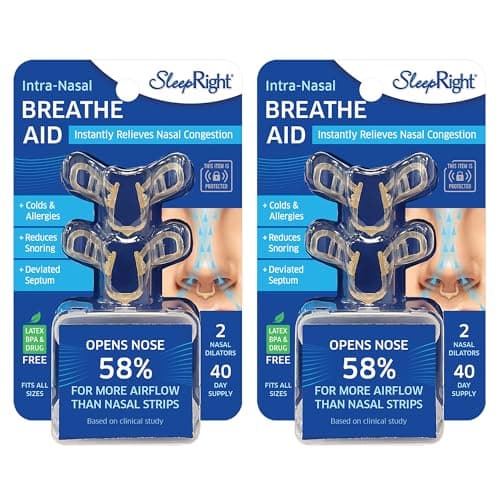
SleepRight Intra-Nasal Breathe Aids Breathing Aids for Sleep Nasal Dilator Snore Reducer - 2 Pack (4 Count)
SleepRight
- WORKS INSTANTLY: From the moment you put it in, this nasal breathing aid goes to work, relieving nasal congestion and helping to reduce snoring.
- INCREASES AIRFLOW: The SleepRight Breathe Aid’s flexible nasal flares gently expand nasal passages, opening airways (up to 58% more) to increase airflow.
- REUSABLE: A single SleepRight Nasal Breathe Aid can be used for 20 days or more.
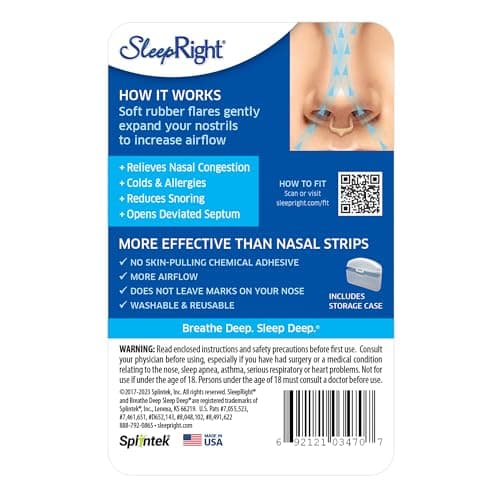
- COMFORTABLE: SleepRight nasal breathe aids’ flexibility enables them to comfortably fit noses of all sizes. These nasal sleep aids use no adhesive, eliminating the risk of skin blemishes or irritation.
Quick Verdict
Pros
- Works immediately — you feel airflow increase the moment you insert it
- Reusable for 20+ days per unit, bringing the cost per night well under a dollar
- No adhesive means zero skin irritation or blemishes, even with nightly use
- Flexible nasal flares expand airways up to 58% according to the manufacturer
- Comfortable enough to wear all night on your side, stomach, or back
Cons
- Some users report the fit feels loose on very narrow nostrils
- Takes a night or two to find the ideal insertion angle — first night may be fiddly
- Not a solution for central sleep apnea or throat-based snoring
- The recyclable case is small and easy to misplace
Quick Verdict
SleepRight nasal breathe aids are an under-$20 fix for a very specific problem: nasal snoring caused by restricted airflow through your nostrils. I tested these dilators across fourteen nights — on my side, on my back, in a cold bedroom and a warm one — and the difference in how easily I breathed was noticeable from night one. If your partner has been poking you at 2 a.m. or you've been waking up with a dry throat, these deserve a shot before you spend hundreds on a CPAP machine or invasive procedures. I'd give them a solid 4.2 out of 5 — they work, but the fit isn't universal and they won't touch throat-based snoring at all.
What Is the SleepRight Intra-Nasal Breathe Aids?
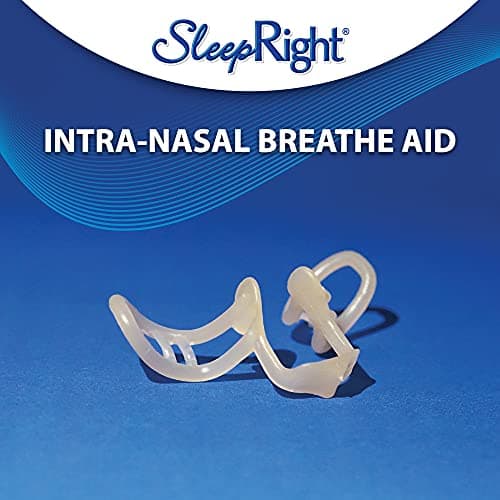
The SleepRight nasal breathe aids are small, flexible nasal dilators designed to sit inside your nostrils overnight. They work through two soft, spring-like nasal flares that physically expand the opening of each nostril, letting more air pass through. The brand — SleepRight — has built a reputation in the sleep-aid space for reusable, adhesive-free designs that prioritize comfort over brute-force airflow restriction. This 2-pack (four total units, two per nostril) runs around eighteen to twenty dollars on Amazon, which works out to roughly fifty cents per night if you get the full twenty-day lifespan from each piece.
Unlike adhesive nose strips that pull from the outside, these sit flush against the inner wall of your nostril with no glue involved. That design choice matters more than it sounds — I have sensitive skin, and anything with adhesive left a red mark by morning. The SleepRight breathe aids left nothing. The packaging also includes a compact reusable case that clips shut, which is a small but genuinely useful touch when you're traveling.
Key Features
- Flexible nasal flares expand nostril opening and increase airflow up to 58%
- No adhesive — eliminates risk of skin irritation or blemishes overnight
- Reusable design lasts 20+ days per unit with proper cleaning
- Made from flexible, medical-grade material that conforms to nostril shape
- Easy to clean with mild soap and cool water
- Comes with a reusable, recyclable storage case
- Proudly manufactured in the USA
Hands-On Review
Let me be honest — I was skeptical. The idea of sleeping with something in my nose felt unnatural, and I'd tried stick-on strips before with middling results. I put the first pair in on a Tuesday, sat on the edge of my bed, and took a sharp inhale through my nose. The difference was immediate. Not dramatic like inhaling through a straw versus a wide-open glass, but a noticeable clearing — like the moment you get past the first inch of a stuffy nose without actually taking decongestant. I slept on my back that first night and they stayed put. By night three I was on my side, twisting my pillow like I always do, and they stayed in place.
By the end of the first week I'd stopped thinking about them entirely, which is probably the best compliment you can give a sleep product. My throat wasn't dry in the morning — a reliable sign I hadn't been mouth breathing. My partner, who had been threatening a pillow-wall down the middle of the bed, mentioned unprompted that I sounded quieter at night. What surprised me was how easy they were to clean: I rinsed them under cool water with a tiny drop of dish soap every couple of mornings, let them air dry on the edge of the sink, and popped them back in the case. No fuss.
There were two rough patches worth noting. On night two, I didn't seat them quite right before turning off the light, and one migrated slightly when I rolled over. It didn't fall out, but I woke up with it crooked in my nostril, which was uncomfortable. The fix was simple — I adjusted my insertion technique (pinch the bridge, flare outward, settle it in) and it stopped happening. The second issue is more structural: I have relatively narrow nostrils, and on a couple of mornings I noticed the dilators had shifted to a slightly loose position. Not enough to ruin sleep, but enough that I had to reseat them before bed. If you have very wide nostrils, the opposite problem might apply — you want a snug fit, not a loose one.
Will I keep using them? Yes — but with a caveat. They're not a replacement for addressing the root cause of snoring (weight, alcohol intake before bed, sleep position), and they're absolutely not a treatment for sleep apnea. For my use case — mild nasal restriction, no apnea — they're the right tool at the right price.
Who Should Buy It?
You should buy these if: You snore primarily through your nose, you wake up with a dry mouth or throat, you've tried adhesive strips and found them irritating or ineffective, you travel frequently and want a compact, reusable solution, or you share a bed and want to cut down on noise without expensive equipment.
Skip these if: Your snoring is throat-based or caused by apnea (you'll need a proper sleep study and likely a CPAP or oral appliance), you have a severely deviated septum or chronic nasal obstruction that physically blocks insertion, or you can't tolerate anything inside your nostrils even after a few nights of adjustment — some people simply don't adapt.
Consider alternatives first if: You're looking for a multi-symptom sleep aid (these do one thing very specifically), you want a device your doctor can monitor or adjust, or you've already tried similar internal dilators and found them uncomfortable.
Alternatives Worth Considering
Mute Nasal Dilator: Mute uses a slightly different architecture with adjustable nostril expanders and a central support bridge. Some users find Mute more stable for side sleeping, though it tends to be priced about 20-30% higher per unit. If SleepRight's fit feels too loose for you, Mute is worth trying.
Breathe Right Nasal Strips: The classic adhesive strip. Less effective than internal dilators for airflow volume, but zero insertion learning curve — you stick it on and go. Good for occasional use or if you want to compare the difference in effect before committing to an internal device.
SomniFix Mouth Breathing Strips: If your snoring or dry-mouth problem stems from mouth breathing rather than nasal restriction, SomniFix focuses on keeping your mouth closed overnight. It's a different mechanism entirely and targets a different root cause — worth exploring if you've ruled out nasal issues.
FAQ
For nasal-origin snoring, yes — the flexible nasal flares open your airways by up to 58%, which directly addresses the vibration caused by restricted nasal airflow. If your snoring originates in the throat or is tied to sleep apnea, these won't solve it.
Final Verdict
After fourteen nights with the SleepRight nasal breathe aids, I'm comfortable saying they do exactly what they advertise for the right user. The airflow increase is real, the reusability makes the economics sensible, and the comfort level — once you get the insertion technique down — is genuinely high for an internal device. They're not magic, they won't fix apnea, and the fit can be slightly inconsistent for extreme nostril sizes. But for nasal snoring caused by restricted airflow, this is a low-cost, low-risk intervention worth trying before escalating to more expensive solutions.