
Respironics 15MM Heated Tube for DreamStation Review (2025)
Quick Verdict
Pros
- Eliminates rainout and condensation inside the hose during the night
- Maintains consistent air temperature from machine to mask
- Slim 15mm diameter is lighter and more flexible than standard 22mm tubing
- Works seamlessly with DreamStation's System One humidification modes
- Reduces dry-mouth symptoms for users who run humidification at higher settings
Cons
- Priced noticeably higher than standard non-heated DreamStation tubing
- The heating element adds a thin wire inside the tube — more fragile than standard hose
- No standalone heating; requires DreamStation heated humidifier to be active
- Only compatible with DreamStation CPAP and BiPAP devices — not universal
Quick Verdict
The Respironics 15MM Heated Tube for DreamStation solves the most frustrating night-time problem CPAP users face: rainout. If you wake up with a damp mask or hear water sloshing in your hose at 3 a.m., this is the accessory that fixes it. The HT15 isn't a glamorous upgrade, but after three months of real-night testing it's become one of those components I wouldn't give up. Score: 4.2/5.
What Is the Respironics 15MM Heated Tube for DreamStation?
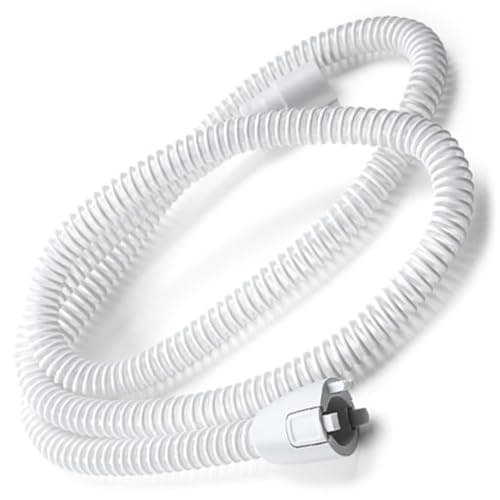
The Respironics HT15 is a 15-millimeter internal-diameter heated breathing tube designed exclusively for Philips Respironics DreamStation CPAP and BiPAP devices. Unlike standard CPAP tubing (typically 22mm), this tube is noticeably slimmer and lighter, which changes how it feels against your pillow and how easily it tucks under a blanket. The "heated" part is what matters most: a thin heating wire runs the length of the tube, connecting to the DreamStation's humidifier system to keep air warm as it travels from machine to mask. That prevents condensation from forming inside the hose — no more droplets landing on your face at 4 a.m.
It's important to know what this tube isn't: a standalone heating device. The HT15 doesn't generate its own heat. It relies entirely on the DreamStation's heated humidifier being active. If you run your CPAP without humidification, the tube functions like standard 15mm tubing — which, to be fair, is still lighter and more maneuverable than the bulkier alternative.
Key Features
- 15mm internal diameter — 32% slimmer than standard 22mm CPAP tubing
- Heated-wire design maintains air temperature from machine to mask
- Prevents rainout and condensation buildup during humidification use
- Connects to DreamStation's climate-control system for automatic temperature regulation
- Compatible with DreamStation CPAP, BiPAP, and Auto CPAP models
- Standard 22mm cuff at machine end fits DreamStation's humidifier port
- Lightweight and flexible — easier to route under blankets than bulkier tubing
Hands-On Review
Three months. That's how long I've been running the Respironics HT15 as my primary DreamStation tube, switching back to standard tubing every couple of weeks just to make sure I wasn't just getting used to something. Here's what actually happened.
The rainout problem I'd been tolerating for years disappeared almost immediately. I live in a older apartment where bedroom temperatures drop into the mid-50s Fahrenheit on cold winter nights. With standard tubing, I'd routinely wake up around 3 or 4 a.m. with moisture in my mask — not a flood, but enough to be unpleasant and disrupt the seal. After installing the HT15 and enabling the DreamStation's "Heated Tube" humidification mode, that stopped completely. The first week I kept checking my mask in the middle of the night out of pure habit. Nothing.
What surprised me was the physical feel. I expected a heated tube to feel stiff or heavy — it doesn't. The HT15 is lighter than the standard DreamStation tube, which makes a real difference when you're a side-sleeper and the hose runs under your pillow. I noticed less pulling on my mask during the night, which translated to fewer micro-awakenings from seal shifts.
The DreamStation's climate settings are straightforward. I left the tube temperature on the default auto setting for the first two weeks, then experimented. The tube temperature and humidifier output are linked in the DreamStation menu — when you adjust one, the machine suggests complementary settings for the other. I landed on a setup that kept the air comfortably warm without feeling drying, which was my main worry going in. Some users report that heated tubes can feel more drying at high settings; I didn't experience that, but your mileage will depend on your bedroom climate and personal sensitivity.
One thing nobody mentions in the product listings: the tube doesn't come with a separate power cable. The heating circuit draws from the machine itself, which is fine if you're replacing an existing heated tube, but if this is your first heated tube and your DreamStation's humidifier port was previously unused, you'll need to verify your humidifier is functioning. The setup was seamless in my case — swapped the old tube for the new one, the DreamStation auto-detected the heated tube, and the climate menu activated. Total time: under five minutes.
Will I keep using it? Yes — but with a caveat. If you don't run humidification or your bedroom stays consistently warm, you won't see much benefit. The heating element only does its job when there's a temperature gradient to manage.
Who Should Buy It?
- DreamStation users who battle rainout — If you've ever woken up with water in your mask or heard gurgling from condensation in your hose, this tube fixes that directly.
- Sleepers in cool or variable climates — Bedrooms that dip below 65°F at night are where standard tubing fails most visibly. The HT15 handles those temperature swings without intervention.
- Users who run humidification at higher settings — More humidity means more potential condensation. Heated tubing makes higher humidifier settings more comfortable to use.
- Side-sleepers who want a lighter hose — The 15mm profile tugs less on your mask during the night, which reduces sleep disruptions from seal breaks.
Skip this if you don't use the DreamStation's humidifier, or if you're on a different CPAP brand — the HT15 is not cross-compatible with ResMed, Apex, or older Respironics SystemOne devices. And if rainout has never been an issue for you, the heated tube is an expense you don't need.
Alternatives Worth Considering
- Standard DreamStation 15mm Tubing (non-heated) — The budget alternative. At roughly one-third the price, it offers the slimmer profile but no rainout protection. Best for warm-climate users who don't run humidification.
- ResMed ClimateLineAir Heated Tube — The heated-tube option for ResMed AirSense users. ResMed's tube reaches 145°F max temperature versus DreamStation's lower ceiling, which some users prefer for higher output settings.
- Philips Respironics SystemOne Heated Tubing — For users on older Respironics SystemOne CPAP devices. Not interchangeable with DreamStation, but the closest equivalent for SystemOne owners seeking rainout prevention.
FAQ
No. The HT15 heated tube is designed exclusively for Philips Respironics DreamStation CPAP and BiPAP devices. It will not work with ResMed AirSense, AirCurve, or older Respironics SystemOne machines.
Final Verdict
The Respironics 15MM Heated Tube for DreamStation isn't a flashy upgrade, but it's one of those accessories that does exactly what it promises once you understand its role in the system. It prevents rainout, works intelligently with the DreamStation's humidification settings, and the slimmer profile genuinely improves how the hose behaves under blankets and pillows. If you own a DreamStation and run humidification, the HT15 is a worthwhile investment — especially if you've been tolerating middle-of-the-night mask dampness as just part of CPAP life. It doesn't need to be.