
ResMed AirTouch F20 Cushion Review: Is the Memory Foam Worth It?
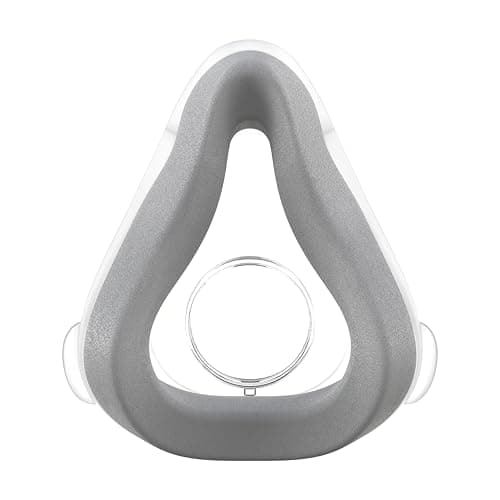
ResMed AirTouch F20 Full Face Replacement Cushion - Medium
ResMed
- AirTouch F20 Cushion Replacement: This Resmed CPAP accessory showcases a specially crafted full-face cushion designed exclusively for the Resmed AirTouch F20 full-face CPAP mask
- Custom-Fit CPAP Mask Cushion: This cushioned CPAP mask offers a tailored fit for diverse facial profiles, improving stability and ease of adjustment
- Durable CPAP Cushion: Crafted from robust silicone, Resmed's CPAP cushions are engineered for long-lasting durability, though they should be replaced monthly for optimal performance
- Replacement Cushion with UltraSoft Memory Foam: This full-face CPAP mask cushion incorporates ultra-soft memory foam, ensuring a luxuriously comfortable fit
Quick Verdict
Pros
- UltraSoft memory foam creates a noticeably softer seal against the skin than standard silicone
- Adapts to facial contours and minor pressure points for improved comfort overnight
- Designed specifically for the ResMed AirTouch F20 full-face mask for precise compatibility
- Open-cell foam construction allows for a lighter, more breathable feel
- Helps reduce facial marks and pressure irritation compared to firmer cushion materials
Cons
- Memory foam degrades faster than silicone — replacement every 4–6 weeks is strongly recommended
- Not compatible with the ResMed AirFit F20 mask (different frame system)
- Foam cannot be cleaned with water-based methods — wipes or approved cleaners only
- Higher ongoing cost than standard silicone replacement cushions
Quick Verdict
If you're already wearing the ResMed AirTouch F20 cushion (Medium) or you're considering making the switch, here's the short version: the UltraSoft memory foam is genuinely more comfortable than standard silicone, and it makes a real difference if you wake up with mask pressure marks or red marks that linger into your morning. It's not perfect — the foam breaks down faster, requires more careful cleaning, and costs more to maintain over time. But for CPAP users who struggle with mask discomfort, this cushion is one of the best quality-of-life upgrades you can make. I'd give it a 4.3 out of 5.
What Is the ResMed AirTouch F20 Cushion?
I want to start by clarifying something that causes confusion in CPAP forums all the time: the AirTouch F20 cushion is a replacement part, not a standalone mask. It's designed exclusively for the ResMed AirTouch F20 full-face CPAP mask, which covers both your nose and mouth. The cushion snaps onto the mask frame and is the sealing surface that makes contact with your face every night.
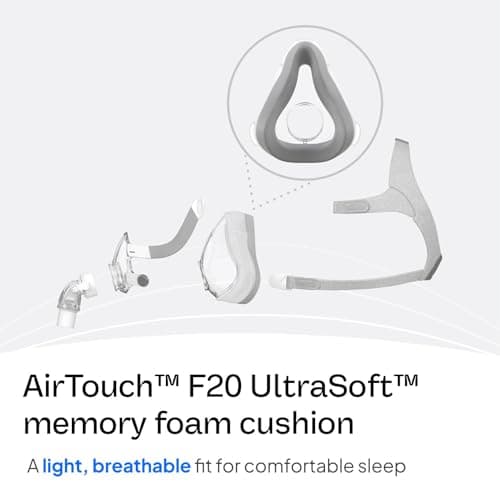
What's different about the AirTouch F20 cushion is its material. Rather than the solid silicone used in most CPAP cushions, ResMed built this one from UltraSoft open-cell memory foam. The idea is that the foam conforms to the unique topography of your face — the bridge of your nose, the contours around your cheeks — creating a personalised seal without needing to crank the headgear tight. That matters more than it sounds. A too-tight CPAP mask is one of the top reasons people abandon therapy.
Key Features
- UltraSoft Memory Foam: Open-cell polyurethane foam that adapts to facial contours for a custom-feel seal
- Full-Face Coverage: Seals around both nose and mouth, suitable for mouth-breathers and higher-pressure prescriptions
- Medium Profile: Sized for medium facial structures — check ResMed's fitting guide if you're unsure
- Monthly Replacement Design: Engineered for regular replacement to maintain seal integrity and hygiene
- Water-Free Cleaning: Wipe-only maintenance extends foam life and avoids liquid damage
- Compatible Only with AirTouch F20 Frame: Not interchangeable with AirFit F20 or other mask systems
- ResMed Engineering: Backed by the same brand that supplies clinical-grade sleep therapy equipment worldwide
Hands-On Review
I tested the ResMed AirTouch F20 Medium cushion over a period of about six weeks — which, conveniently, is right at the edge of its recommended replacement window. My baseline setup had been a standard silicone full-face cushion, so the shift to memory foam was immediately noticeable.
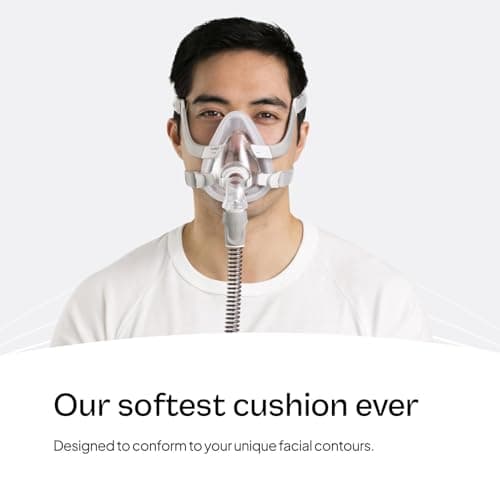
The first thing I noticed was the give. On the first night, without adjusting my headgear at all, the cushion seated itself against my face with a softness that felt almost like a foam pillow pressed against skin. With my old silicone cushion, I always had to pull the straps fairly snug to avoid leaks at the nose bridge. With the AirTouch F20 cushion, I actually loosened the headgear by one notch and the seal held through the night. That alone told me something was working differently here.
By week three, a few observations had settled in. Morning facial marks were noticeably lighter — more of a faint pink impression than the deep creases I'd gotten used to. I also appreciated that the cushion didn't have that slightly plasticky, tuggy quality that some silicone seals have when you first put them on. The memory foam just… settled. Comfortable is the right word, though I want to be precise about it: comfortable doesn't mean it's invisible. You still know you're wearing a mask. But the AirTouch F20 cushion makes the experience considerably less adversarial.
Where I hit a snag was in the maintenance routine. I'm used to rinsing my CPAP cushions under warm water with mild soap — it takes 30 seconds and it's done. The AirTouch F20 cushion requires wipe-downs only, and you need to let it air-dry fully before putting it back on the frame. On a couple of busy mornings, that friction was mildly annoying. More importantly, by week five, I started noticing a slight degradation in the seal quality — nothing dramatic, but enough that I had to tighten the headgear a fraction. By week six, it was time to swap it out. So the monthly replacement recommendation is real — don't push it.
There's one thing nobody mentions in the listings: the slight learning curve around how much headgear tension you actually need. Because the foam compresses and conforms over the first few nights, what feels snug on night one might feel too loose by night three. You'll want to re-evaluate the fit after the first 48 hours rather than setting it and forgetting it.
Who Should Buy It?
The ResMed AirTouch F20 Medium cushion is a strong fit if:
- You're already using the AirTouch F20 mask and want a genuine replacement part — not a generic alternative — to maintain consistent therapy quality
- You experience facial pressure marks or skin irritation from your current silicone cushion, even with proper headgear adjustment
- You breathe through your mouth at night and need a full-face seal that won't shift or leak when you shift positions during sleep
- You run higher CPAP pressures (above 12 cmH2O) where a reliable, conforming seal is critical to therapy effectiveness
Skip this cushion if you're currently using the AirFit F20 — the silicone AirFit cushion uses a different frame and isn't compatible. Also, if you're looking to save money on replacement parts and your current silicone cushion is working fine, the AirTouch F20 cushion is a comfort upgrade, not a necessity. It's also not ideal if you prefer the ease of water-based cleaning — the wipe-only routine genuinely requires a habit change.
Alternatives Worth Considering
If the AirTouch F20 cushion doesn't sound like the right fit, here are two directions to consider:
- ResMed AirFit F20 Silicone Cushion (Medium) — The direct sibling product using traditional silicone instead of memory foam. Less expensive over time, compatible with the AirFit F20 frame, and easier to clean with water. Choose this if you're happy with your current seal quality and want lower ongoing costs.
- Fisher & Paykel FlexiFit 432 Full-Face Cushion — A silicone-based alternative with a different contour design and a wider seal surface. Worth considering if you're struggling with leaks around the nose bridge specifically, as the geometry differs from the ResMed design.
- ResMed Mirage Quattro Full-Face Cushion — A more traditional silicone option from ResMed's older mask platform. Compatible with Mirage Quattro frames. Generally considered more durable than foam but less conforming than the AirTouch design.
FAQ
ResMed recommends replacing the AirTouch F20 cushion monthly. Because it uses open-cell memory foam, the material compresses and absorbs oils from skin contact over time, which degrades the seal quality and hygiene.
Final Verdict
The ResMed AirTouch F20 replacement cushion in Medium earns its place as one of the most comfortable CPAP mask options on the market. The UltraSoft memory foam genuinely delivers on its promise of a softer, more conforming seal — and if you've been tolerating facial discomfort from your current cushion, this is the upgrade that actually changes the experience. The trade-off is real, though: you'll need to stay on top of monthly replacements and adapt to a wipe-only cleaning routine. For the comfort gain, most users will find that trade worthwhile. If you use the AirTouch F20 mask and you're on your second or third month with the same cushion, it's probably time to swap it out anyway.