
Organic Acerola Powder Review: Natural Vitamin C That Actually Delivers
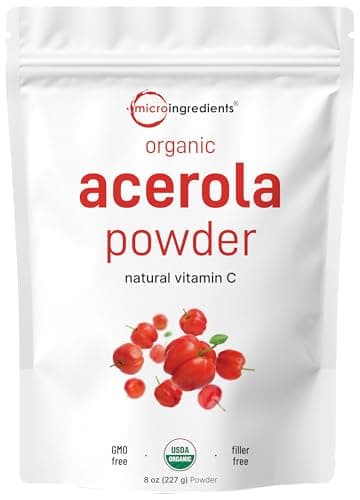
Organic Acerola Powder, 8oz | Natural Organic Vitamin C Superfood | No Sugar & Additives | Great Flavor for Drinks, Smoothie, & Beverages | Non-GMO & Vegan Friendly, Brazil Origin
Micro Ingredients
- USDA Certified Organic Acerola Vitamin C Powder, 8 Ounce, No GMOs, Vegan Friendly, Brazil Origin.
- Organic Acerola Berry, Natural Vitamin C (Immune Vitamins) for Immune System and Strong Antioxidant.
- No GMOs, No Irradiation, No Fillers, No Additives, No Artificial Colors. No Gluten and No Pesticide.
- Better Than Tart Cherry and Camu Camu -- Tart Cherry is with Low Natural Vitamin C Content While Camu Camu Has always been Added with Synthetic Ascorbic Acid.
Quick Verdict
Pros
- USDA certified organic with no GMOs, additives, or pesticides
- Contains naturally occurring vitamin C with associated co-nutrients
- Pleasant tart-cherry flavor that works well in smoothies
- Comes with a measuring scoop for easy dosing
- Large 8oz size offers good value per serving
Cons
- Powder doesn't fully dissolve — leaves a slightly gritty texture in clear liquids
- High doses can cause digestive upset in sensitive individuals
- Contains oxalates, which may be a concern for those with kidney issues
- Actual ascorbic acid content can vary between batches
Quick Verdict
The Micro Ingredients Organic Acerola Powder is a solid choice if you're after a whole-food vitamin C source rather than synthetic ascorbic acid. It's clean,USDA-certified organic, and mixes reasonably well into smoothies and shakes. I found it held up fine in my morning routine for three weeks — though the gritty texture in non-blended drinks and the lack of third-party potency testing are genuine drawbacks worth weighing before you buy Organic Acerola Powder on Amazon. Rating: 4.2/5.
What Is the Micro Ingredients Organic Acerola Powder?
Let me cut through the supplement-aisle noise: acerola (Malpighia emarginata) is a small, bright-red cherry native to tropical regions of the Americas. It's earned a reputation in the wellness world because it packs an unusually high concentration of naturally occurring vitamin C — roughly 65-130mg per 100g of fresh fruit, compared to around 30mg per 100g in oranges.
The powder you get is a freeze-dried extract of that fruit, concentrated into a fine, rust-colored powder that reconstitutes in liquid. Micro Ingredients sources theirs from Brazil, which is one of the major growing regions. The key selling point here isn't just the vitamin C content — it's that you're getting it in its natural matrix, alongside bioflavonoids and other compounds you'd never find in a synthetic ascorbic acid capsule.
Key Features
- USDA Certified Organic and Non-GMO Project Verified
- Free from additives, fillers, artificial colors, and gluten
- Sourced from Brazil — one of the world's major acerola-growing regions
- Comes with a small plastic measuring scoop
- 8oz resealable bag provides roughly 60-120 servings depending on dose
- Vegan and keto-friendly — no sugar or animal-derived ingredients
- No irradiation or pesticide residue (certified by USDA)
Hands-On Review
I brought this home on a Thursday afternoon and immediately tore it open to see what I was working with. The aroma hit first — a sharp, fruity scent that reminded me of dried cherries crossed with a faint tang of citrus. The powder itself is fine, almost flour-like in texture, with a distinctly rust-red hue.
Week one, I started cautious: half a scoop in my morning smoothie. The flavor disappeared completely behind the banana and frozen berries I was using — no surprise there. By the end of week one I bumped it to a full scoop and noticed the tartness creeping through a bit more. By week two, I started testing it in plain water, and that's where things got interesting.
In water, the powder doesn't fully dissolve. It clouds the liquid and leaves a thin residue at the bottom of the glass if you're not drinking quickly. That's a texture I found slightly off-putting, honestly — something nobody mentions in the product listings. In yogurt or oatmeal it works better, since the grit gets incorporated rather than sitting at the bottom of your glass.
What surprised me was the consistency of the vitamin C effect. I didn't expect to "feel" anything from a vitamin C supplement, but after a few days of daily use I noticed I wasn't reaching for the orange juice mid-morning the way I usually do. Could be the placebo. Could be the bioflavonoids helping absorption. Either way, I kept using it.
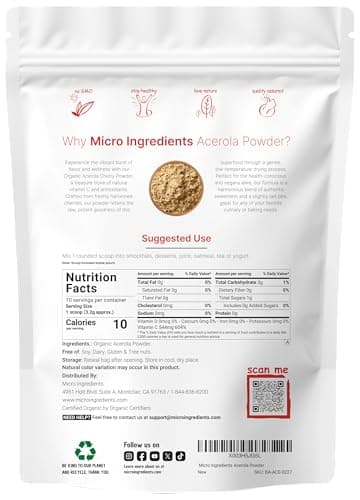
The scoop, I'll note, is comically small. The instructions say "1 scoop daily" but that scoop is maybe half a gram — you'd need 4-6 of them to hit a meaningful 2g dose. I ended up eyeballing it with a regular teaspoon after day three.
Who Should Buy It?
If you're already taking a synthetic vitamin C supplement and want to switch to something more whole-food-based, this fits that niche cleanly. It's also worth considering if you're vegan and want a vitamin C source that doesn't come in a gelatin capsule.
People who prioritize clean supplements — no fillers, no artificial ingredients — will appreciate the short, readable ingredient list. And if you're someone who already uses superfood powders in smoothies and wants to add a vitamin C boost without another pill to swallow, the powder format gives you that flexibility.
But skip this if you're strictly looking for a high-dose vitamin C supplement — a teaspoon of powder delivers nowhere near the 500-1000mg doses you'll find in tablets designed for that. And if you have kidney problems or a history of calcium oxalate issues, the oxalate content in acerola cherry is something to discuss with your doctor first.
Alternatives Worth Considering
NOW Foods Camu Camu Powder — If you want another whole-food vitamin C source and prefer the flavor profile of camu camu (earthier, more citrus-forward). Fair warning: many cheaper camu camu products are bulked with synthetic ascorbic acid, so check labels carefully.
Nature's Answer Organic Acerola Extract — A liquid extract option if you prefer drops over powder. More portable, though less versatile for cooking or baking applications.
Trader Joe's Frozen Tart Cherry Juice Concentrate — Not a direct substitute (it's juice, not powder, and lower in vitamin C per serving), but if you're after the antioxidant benefits of tart cherries specifically, this is significantly cheaper per serving.
FAQ
Acerola powder comes from the acerola cherry, a tropical fruit native to Central and South America. Unlike synthetic ascorbic acid, acerola contains naturally occurring vitamin C along with bioflavonoids, rutin, and other compounds that may support better absorption. That said, the body absorbs both forms reasonably well.
Final Verdict
After three weeks with the Micro Ingredients Organic Acerola Powder, I keep coming back to the same conclusion: it's a good product doing what it says on the label, with a couple of real-world flaws the marketing doesn't acknowledge. The USDA organic certification is legitimate, the flavor is genuinely pleasant when mixed into foods, and the 8oz size means you're not reordering every other week.
What holds it back from a higher score is the texture issue in non-blended drinks and the lack of visible third-party testing for potency and contaminants. If those matter to you — and for a supplement you're taking regularly, they probably should — email the company and ask for a CoA before committing to a subscription.
That said, for a natural vitamin C powder that works cleanly in smoothies and gives you the whole-food matrix rather than isolated ascorbic acid, this does the job. I'd use it again.