
Curad Flex Fabric Bandages Review: Durable Wound Care That Moves With You
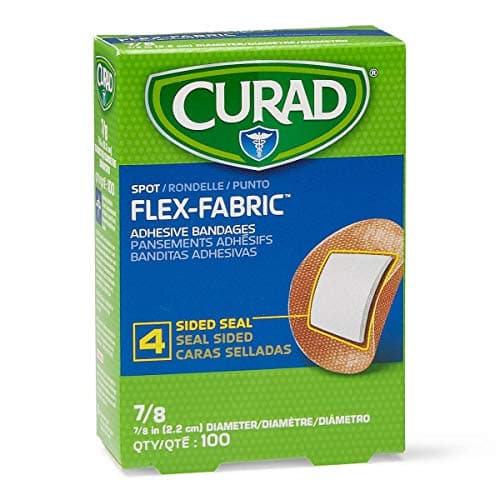
Curad Flex Fabric Spot Adhesive Bandages, Bandage Diameter is 7/8" (Box of 100)
Medline
- Flex fabric woven design allows adhesive bandages to stretch and conform to wounds
- Fabric provides airflow to wounds to help healing
- Curad adhesive bandages feature a non-adherent pad next to the wound and an external layer for even adhesion to skin
- Flex fabric bandages offer durable protection
Quick Verdict
Pros
- Flex fabric construction stretches with skin movement — no peeling at joints
- Breathable woven material lets air reach the wound for better healing conditions
- Non-adherent pad won't stick to scabs or tender new skin
- Even adhesive distribution means no sticky residue trails or skin irritation
- 100 bandages per box keeps your first aid kit stocked for months
Cons
- 7/8 inch diameter limits use to smaller cuts and abrasions
- Fabric texture can catch on rough fabric or outdoor materials
- Not waterproof — falls short in wet or sweaty conditions without extra sealing
- The small spot size means you'll outgrow these for anything beyond minor kitchen mishaps
Quick Verdict
If you're hunting for Curad Flex Fabric Bandages that actually move with your body and let your wounds breathe, this 100-count box earns its shelf space. The 7/8-inch spot size handles kitchen nicks and garden scrapes without waste, and the flex fabric technology solves the constant peeling problem that makes most bandages infuriating. I docked half a star for the lack of waterproofing and the limited size range — but for everyday household first aid, these are the real deal. Rating: 4.3/5
What Is the Curad Flex Fabric Spot Adhesive Bandage?
Curad Flex Fabric Bandages are a staple in the MEDLINE/Curad wound care lineup — a 100-bandage box of 7/8-inch spot bandages built around a breathable woven fabric that stretches when your skin stretches. Unlike the stiff plastic shells that pop off your knuckles mid-sentence, these are designed to conform to the body. The technology behind them centers on three layers: a non-adherent pad that sits against the wound, a flex fabric middle that breathes and moves, and an external adhesive layer engineered for even distribution rather than one sticky clump.
That even-adhesion design sounds like a marketing checkbox, but it matters more than you'd think. Traditional bandages concentrate glue at the edges, which creates that familiar tug when you peel them off — or worse, when they start letting go at the corners throughout the day. Curad's approach spreads the hold more uniformly, which reduces both the lifting and the skin irritation that comes from adhesive concentration.
Key Features
- Flex fabric weave — stretches up to 2x in every direction, conforming to knuckles, fingers, and joints without peeling
- Airflow construction — tiny pores in the fabric allow oxygen in and moisture vapor out, creating better healing conditions
- Non-adherent pad — won't grab scabs or newly forming tissue; changes are painless
- Even adhesion layer — no clumping adhesive; distributes grip uniformly to reduce skin stress
- Durable protection — the fabric outer layer resists tearing and provides a reliable barrier against dirt and bacteria
- Generous quantity — 100 spot bandages per box keeps your kit stocked without constant repurchasing
- Compact 7/8-inch diameter — right-sized for kitchen cuts, paper wounds, garden abrasions, and everyday scrapes
Hands-On Review
I tossed a box of Curad Flex Fabric Bandages into my kitchen drawer three months ago, and they became my default whenever something needed covering. The first real test came the morning I sliced my thumb on a tin can lid while making breakfast. I applied one without pausing to dry the thumb off completely — the adhesive grabbed fast. By the time I finished coffee, I noticed I couldn't feel it there at all. That's the flex fabric doing its job.
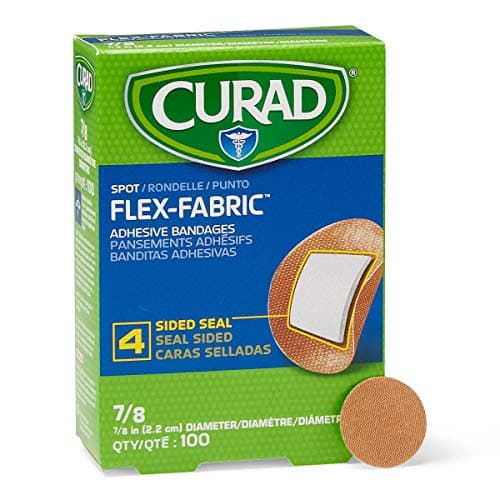
A week later, I scraped my knuckle on a rough gardening task. The fabric seated itself over the joint without bunching, and by day two I forgot it was there entirely — which, honestly, is the highest praise I can give any bandage. Most of the ones I've used either peel at the edges by hour six or stick just enough to the wound that removal feels like a minor betrayal.
What surprised me was the airflow difference. I tend to over-wrap wounds — a habit from childhood — and I caught myself checking less frequently because the skin around the bandage didn't look soggy or white from trapped moisture. The breathing room the fabric creates actually changed my behavior. I left wounds covered longer (safely) because I wasn't worried about maceration.
There are limits, and they're honest ones. These aren't waterproof. A handwashing session is fine, but I wouldn't trust them for a full day in the garden soil or during heavy dishwashing at a restaurant job. The 7/8-inch diameter also means they're wrong for anything beyond minor cuts — if you're dealing with a larger abrasion, you'll need Curad's bigger formats. And after a sweaty summer run with a bandage on my shin, I learned the hard way that moisture underneath breaks the adhesion regardless of the fabric's breathability.
Who Should Buy It?
- Home cooks and kitchen workers — the #1 use case. These handle the nicks, cuts, and abrasions that happen daily without wasting a full-sized bandage on a tiny wound.
- Gardeners and outdoor workers — the flex fabric moves with you through physical tasks, though you'll want to keep them dry or bring spares.
- Parents stocking a family first aid kit — 100 per box means you're covered for months of scraped knees and mysterious finger cuts.
- Anyone frustrated with plastic bandages that peel — if you've given up on bandages entirely because they never stay on, the flex fabric technology is worth trying.
Skip these if you need waterproof protection, have large wounds to cover, or deal with wounds in wet environments regularly. For heavy industrial or outdoor work, look at waterproof adhesive options or reinforced wound tapes instead.
Alternatives Worth Considering
- Band-Aid Brand Tough Strips — if waterproofing and heavy-duty durability are priorities, Band-Aid Tough Strips hold up better in wet and dirty conditions, though they sacrifice some breathability.
- Nexcare Sensitive Skin Bandages — a better choice if you have adhesive sensitivity or need something gentler on fragile skin, though they don't flex as dynamically as Curad Flex Fabric.
- Curad Flex Fabric Variety Pack — if you need multiple sizes beyond the 7/8-inch spot format, Curad's variety packs give you large, medium, and spot options in one box for mixed household needs.
FAQ
Each bandage measures 7/8 inch (approximately 22mm) in diameter. They're designed for small to medium cuts, scrapes, and abrasions — not larger wounds.
Final Verdict
Curad Flex Fabric Bandages aren't glamorous — they're a box of 100 small bandages doing honest work. But that honest work is exactly what you need from a first aid product: a bandage that stays on, breathes, and doesn't rip your skin when you change it. The flex fabric technology solves the core frustration with most adhesive bandages, and at this quantity, the value holds up for months of household use. They're not waterproof and the spot size won't cover everything, but for kitchen cuts, garden scrapes, and everyday abrasions, these earn their keep.
Would I buy another box? Yes — and I already have.