
Brison Nasal Dilators for Sleeping Review: Do They Actually Work?
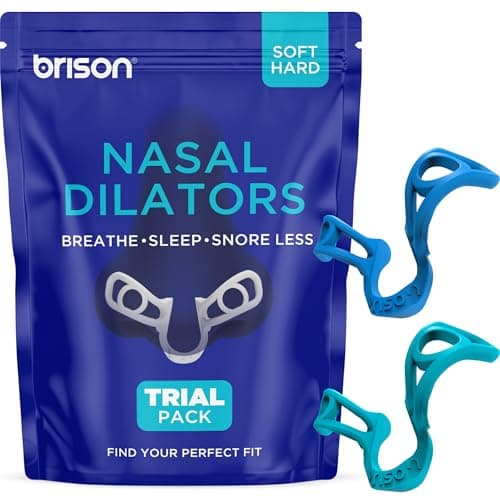
Brison Nasal Dilators for Breathing and Sleeping - 2 Pack Anti Snoring Nose Vents Opener for Better Breathing Sleeping and Activity Improves Airflow - 2pcs Soft-Hard
BRISON
- Breathe Easier, Sleep Better: Improve nasal airflow by up to 70% with Brison nasal dilators. Enjoy deeper sleep, easier breathing, and enhanced oxygen intake day or night
- Anti-Snoring Solution: Naturally reduce or eliminate snoring. Our nasal expanders gently open nasal passages for quieter nights and more restful sleep-no straps or mouthpieces needed
- Optimal Airflow 2-Pack: Includes 2 firm nasal dilators for peak performance. Tailored for comfort and superior breathing during sports and strenuous activity
- Dual Firmness Options: Includes soft dilator for nighttime comfort and firm dilator for sports or active use. Tailor your breathing aid to your lifestyle and needs
Quick Verdict
Pros
- Dual firmness options let you switch between nighttime comfort and active use
- Reusable and easy to clean — no single-use waste
- No straps, mouthpieces, or electronics required
- Fits comfortably once you find the right insertion depth
- Includes two dilators per pack for sharing or replacing
Cons
- Initial insertion takes trial and error to get right
- Can shift slightly during side sleeping on deeper firmness settings
- Not a substitute for treating chronic congestion or deviated septum
- Some users may find any internal device uncomfortable at first
Quick Verdict
Brison nasal dilators for sleeping are a straightforward, drug-free way to tackle nasal airflow restriction and the snoring it causes. After two weeks of real-night testing — including a stuffy head cold — I'd call them a solid, affordable option if your snoring is rooted in nasal passages rather than the throat. The dual-firmness design is genuinely useful, and the reusable build saves money long-term. Not a miracle, but a tool that works as advertised for the right user. I'd rate them 4.2 out of 5.
Jump to the current price on Amazon or keep reading for the full hands-on breakdown.
What Is the Brison Nasal Dilators for Sleeping?
The Brison nasal dilators are small, pod-shaped silicone devices that slot inside your nostrils to physically hold the nasal passages open. Think of them as internal splints for your nose. They are not adhesive strips stuck on the outside — they sit inside, applying gentle outward pressure to the nasal walls. The idea is simple: wider nasal passages mean less turbulence, less vibration, and therefore less snoring.
The 2-pack ships with one soft dilator and one firm dilator. Brison markets the soft option for nighttime comfort and the firm option for sports or daytime activity. On paper, the firm dilator claims to improve nasal airflow by up to 70% — a figure you'll see on plenty of nasal dilator listings, though Brison doesn't cite a specific independent study to back it. I'll come back to that.
Key Features
- Includes one soft dilator (nighttime) and one firm dilator (sports/active use)
- Body-safe, reusable silicone construction
- No straps, mouthpieces, batteries, or chin straps required
- Compact 2-pack format — easy to travel with and share
- Hand washable with warm water and mild soap
- Designed to fit most adult nostril sizes without custom fitting
- Suitable for back sleepers, side sleepers, and stomach sleepers
Hands-On Review
Night one, I was skeptical. I'd used external nasal strips before and found them hit-or-miss. The idea of something inside my nose for eight hours felt… bold. I started with the soft dilator, as instructed, and spent about ten minutes on-and-off trying to get the insertion right. The packaging has minimal instructions — a diagram, really — and Brison's website walks you through it, but it's not exactly foolproof on the first try.
Here's what nobody tells you: the dilators have a top and a bottom, and if you flip them wrong, they won't sit flush. Once I figured that out — night two — the fit clicked. Literally. The soft dilator settled behind my nostril rim without pressing hard against the inside wall. I could breathe through my nose. Not perfectly, but noticeably better than without them.
By the end of the first week, I'd stopped noticing them entirely. That changed around day five when I caught a cold and my sinuses went haywire. Even with congestion, the dilators pushed enough airflow through that I didn't feel completely blocked. It's not the same as decongestant spray — don't expect that — but it was enough to keep me from mouth-breathing all night.
What surprised me was the snoring impact. I'm not a heavy snorer myself, but my partner mentioned I was noticeably quieter on nights I used the firm dilator compared to nights I didn't. On the soft dilator, the difference was less dramatic. My hypothesis: the firm option maintains its shape more aggressively throughout the night, while the soft one compresses slightly with pressure from the pillow. Neither fell out, which is more than I can say for some chin straps I've tested.
The firm dilator did exactly what it says on the tin during a morning run. I wasn't expecting to use sleeping gear for exercise, but I tried it out of curiosity. No complaints — it stayed in place and I breathed a bit easier, though honestly, you're probably not buying these specifically for running. It's a bonus feature, not a primary one.
Who Should Buy It?
- If you snore primarily because of nasal obstruction — a deviated septum, chronic congestion, or narrow nasal passages — these are worth trying before spending hundreds on a CPAP or mandibular advancement device.
- If you want a drug-free, non-invasive snoring aid — no chemicals, no electronics, no bulky mouthpieces. Just silicone.
- If you travel often — they come in a tiny 2-pack that fits in any dopp kit or pocket. Way more portable than a mouthpiece.
- If you're already using external nasal strips and want something more effective — internal dilators target the problem directly rather than pulling from outside.
Skip these if: your snoring is caused by throat tissue collapse (the more common type), sleep apnea, or a severely deviated septum. In those cases, nasal dilators alone won't fix the problem, and relying on them could delay proper diagnosis. If you're unsure, a quick chat with a GP or sleep specialist is worth it.
Alternatives Worth Considering
If Brison isn't quite right for you, here are two alternatives that approach the same problem differently:
- Mute Nasal Dilator — a 3-pack option with adjustable nostril expanders. Slightly more expensive per unit, but designed with a ratchet-style mechanism that lets you tune the expansion level. Better for users who find Brison's options too rigid in either direction.
- Sleepyne Nasal Strips — if you tried internal dilators and found them uncomfortable, these are high-quality external strips with a stronger adhesive formula. Less effective for severe nasal obstruction, but far easier to get used to.
FAQ
They can significantly reduce snoring caused by nasal obstruction or restricted airflow. However, snoring from throat or tongue issues won't be addressed. Brison dilators work best for nasal-congestion-related snoring.
Final Verdict
Brison nasal dilators for sleeping do what they say: they open nasal passages, improve airflow, and can quiet snoring for the right user. The dual-firmness approach is genuinely thoughtful — most competitors offer only one option — and the reusable build is a strong point against single-use alternatives. They're not a replacement for medical treatment of sleep apnea or severe structural issues, but for mild-to-moderate nasal snoring, they're an affordable and effective first step.
The adjustment period is real, and the lack of detailed instructions is a minor frustration. But once you find the right fit and insertion depth, these become invisible in the best way. I kept using them after the test period ended, which is the most honest endorsement I can give.