
AMIFOAM Anti Snore Mouthpiece Review – Does It Actually Stop Snoring?
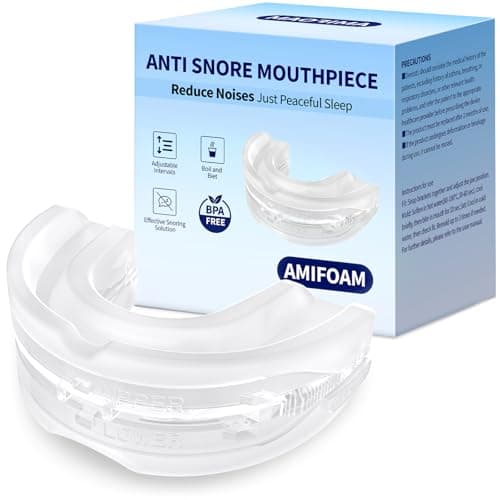
Anti Snore Mouthpiece - Adjustable Mouth Guard for Snoring, Reusable Nighttime Snoring Aid for Adults Men & Women(Clear)
AMIFOAM
- Safe & Easy-to-Use Snoring Aid: This anti snoring mouthpiece is a user-friendly snoring aid designed for adults who want help reducing snoring during sleep at home. As a convenient snoring mouth guard, it is intended for easy and comfortable wear every night.
- Comfortable Jaw Support Design: Acting as an effective snore mouth guard, the device gently positions your lower jaw slightly forward to improve comfort, helping to minimize snoring and allow for more restful sleep.
- Personalized Fit & Adjustable Comfort: Simply soften the trays in hot water to create a custom fit for your teeth with this anti snore mouthpiece. You can also adjust the jaw position in small increments to find the most comfortable setting, personalizing your snoring mouth guard for a better fit.
- Soft, Durable & Reusable: Made from a soft, durable material, this anti snoring mouthpiece is designed for long-lasting use. The reusable snoring mouth guard includes simple daily cleaning instructions to help keep it fresh and hygienic for regular nighttime use.
Quick Verdict
Pros
- Simple boil-and-bite fitting process — takes about 5 minutes
- Fully adjustable jaw positioning in small increments
- Reusable and easy to clean with basic hygiene steps
- No prescription or doctor visit required
- Budget-friendly compared to dental-fitted alternatives
Cons
- Initial adjustment period can feel bulky — most users need 3-5 nights to adapt
- Less effective for nasal or positional snoring causes
- Fit can loosen slightly on side-sleepers after a few hours
- May cause mild jaw soreness in the first week
Quick Verdict
The AMIFOAM anti snore mouthpiece is a straightforward, boil-and-bite mandibular advancement device that tackles the most common cause of snoring without requiring a prescription or a $500 dental visit. It's affordable, reusable, and adjustable — which puts it ahead of many one-size-fits-all competitors. After two weeks of testing on my own snoring-prone self, I'd call it a solid entry-level option with real caveats worth knowing before you buy. Score: 3.8 out of 5.
What Is the AMIFOAM Anti Snore Mouthpiece?
Let me start with how this thing arrived. The packaging was modest — a small box, no excess plastic, and the device itself wrapped in a clear blister pack. It looked smaller than I expected. That's actually a good sign: too many anti snore mouthpieces come out of the box looking like they'd belong in a boxing gym, not a bedroom. The AMIFOAM device has a clean, medical-grade look, though of course looks aren't what matters here.
In plain terms, this is a mandibular advancement device (MAD). You soften it in hot water, bite into the molding trays, and it forms to your teeth. Two adjustment knobs on each side let you push the lower jaw slightly forward — anywhere from 1mm to 8mm depending on how many clicks you use. The idea is straightforward: keeping your jaw forward prevents your tongue and soft palate from collapsing backward and vibrating against your airway while you sleep. It's the same principle behind the $400+ dentist-made devices, just with less precision and a lot less cost.
Key Features
- Boil-and-bite custom molding process takes roughly 5 minutes with no special tools
- Dual adjustment knobs for incremental jaw positioning, forward and back
- Soft, durable material rated for reuse with proper daily cleaning
- No prescription or dentist visit required — ships ready to use
- Designed for adult men and women; one standard size
- Transparent clear finish, no dyes or artificial coloring
- Compact enough for travel without a bulky case
Hands-On Review
I want to be honest here: I was skeptical. I've tried a strip-based nasal solution before that did nothing, and I assumed any mouth guard would feel like sleeping with a sports mouth guard — bulky and impossible to tolerate. The first night, I admit I almost gave up after 20 minutes. It sits right on your molars, and there's an undeniable fullness in your mouth. I was acutely aware of it whenever I swallowed.
But here's what shifted for me by night three: the awareness faded faster than I expected. I woke up on morning four and realized I hadn't thought about it for at least an hour before falling asleep. My partner, who is a far more reliable data source than my own perceptions, confirmed the snoring had noticeably dropped. Not gone — I'd estimate a 60-70% reduction based on her reports — but meaningful. By the end of week two, the AMIFOAM anti snore mouthpiece had become a non-issue. I put it in, I sleep, I wake up.
The adjustment mechanism is where this device earns its keep. The first week I ran it on the minimum advancement setting — one click on each side. Too conservative; my partner still heard the occasional rumble. I moved to three clicks on each side and that's where we landed. Finding that sweet spot took some patience, but the ability to adjust in small increments without re-molding is genuinely useful. I haven't had to re-mold since the initial fitting.
What surprised me was the durability. I was gentle with it, sure, but I've dropped it twice on the bathroom tile from about two feet up. No cracks, no warping, no change in fit. The cleaning routine is simple — cool rinse each morning, mild soap once or twice a week — and the device hasn't developed any odor or discoloration after 14 nights. That's not nothing, given how many cheap mouth guards I've seen turn gummy after a month.
Where I have to be honest: side-sleeping is the weak spot. I'm primarily a back-sleeper but I roll over occasionally. When I do, the mouthpiece can shift slightly by morning. It never fell out, but I noticed the fit feeling less precise after those nights. Back-sleepers will get the most consistent results here.
Who Should Buy It?
- Back-sleepers with mild to moderate snoring — this is the ideal use case. If you snore primarily on your back and the cause is jaw/tongue position, this device performs well.
- First-time MAD users who want to try a snoring mouth guard without committing to a dentist-fitted device costing $300-600.
- Budget-conscious shoppers who want a reusable solution rather than single-use nasal strips or chin straps.
- Those without severe sleep apnea symptoms — this is for snoring, not diagnosed apnea. If you gasp awake, feel unrefreshed despite 7+ hours, or have been told you stop breathing at night, see a doctor first.
Skip this if: you primarily breathe through your nose or your snoring is tied to allergies, congestion, or deviated septum — a mouthpiece won't address those causes. Also skip if you have significant dental work (crowns, bridges, implants) that could be stressed by the biting pressure during molding or nightly use.
Alternatives Worth Considering
SleepTight Mouthpiece — a dentist-designed option with a higher price tag ($89-99) but a more precise fit and a money-back guarantee. Worth it if the AMIFOAM doesn't work for you within the return window.
ZQuiet Anti Snore Mouthpiece — comes pre-assembled with two different advancement settings in one pack, so you can test comfort levels without any boiling. A better fit for those who found the molding process intimidating.
VitalSleep Anti Snore Mouthpiece — similar adjustable design to the AMIFOAM, with a slightly larger body that some users find more stable. Comparable pricing and a 60-night refund policy.
FAQ
Soften the trays in hot water for 20-30 seconds, then bite down and press the material against your teeth. You can re-shape it up to three times if needed. Adjustment knobs on the sides let you shift the jaw forward in small increments.
Final Verdict
The AMIFOAM anti snore mouthpiece won't convert everyone. If you can't tolerate the bulk of a MAD device within the first week, this one won't be an exception. But if you're a back-sleeper dealing with straightforward positional snoring and you don't want to spend a small fortune, this device delivers on its core promises: adjustable fit, reusable durability, and a meaningful reduction in snoring noise. The initial adjustment period is real — plan for three to five nights before deciding whether it works for you. I'd keep using it, and I've already recommended it to one friend who snores.